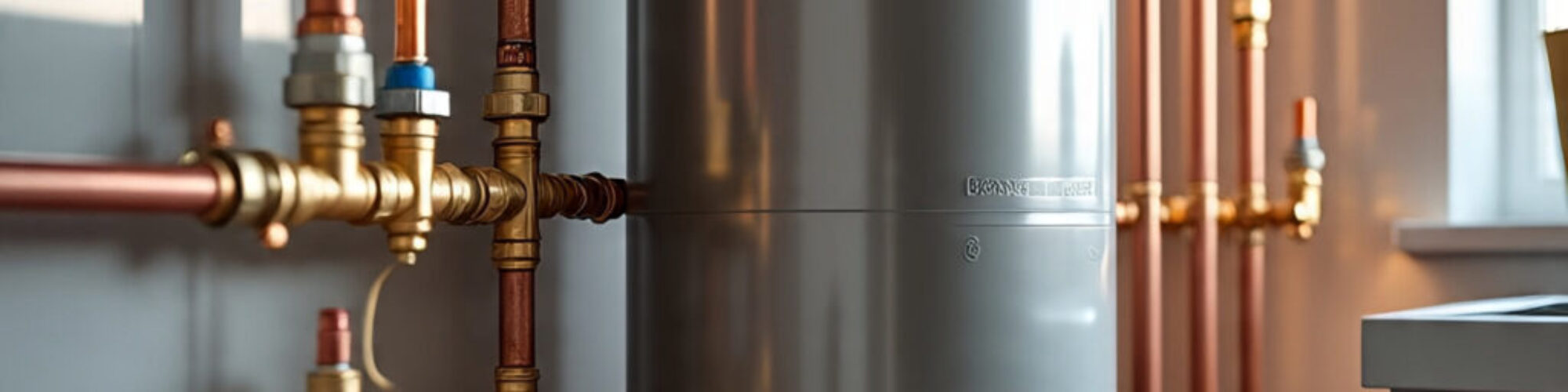
Save Money with plumbing alterations
Save money with your plumbing alterations
Discover plumbing alterations that save money.
You probably didn’t think that plumbing, electrical, and gasfitting was likely to save you money, energy is expensive, and these trades are responsible for installing and maintaining appliances that use a lot of energy. If we ensure efficient and well-maintained appliances are used, then you can save a lot of money over the years.
The energy we can save is for water heating, space heating, cooking, and lighting.
Plumbing alterations to save money.
- Upgrading your hot water pressure to high pressure can cost around $600 per year in increased energy costs due to more hot water used. A water-efficient showerhead will reduce that bill by around $350 a year.
- A situation where a gas storage water heater was considered instead of a continuous flow would save money where a lot of hot water was used. If only a small amount of hot water is used then a continuous flow will be cheaper to run due to no heat loss. Some continuous flow water heaters have much larger heat exchangers and are condensing due to a large amount of heat extracted.
- The use of a conventional water heater costs around $1500 per year to run. Installing a shower heat recovery system will save money.
- Heat pump water heaters have around a three to five-year payback.
- Fit a cylinder wrap if you have an older tank. It insulates your tank and reduces heat loss which is expensive over the long term.
- Insulate the piping around water heaters.
- Use small LPG bottles to supply gas to cooking appliances rather than piped gas to the property and save on the line charge if that is the only appliance using gas. It pays to use piped gas if using large quantities as its cheaper.
- Get your hot water cylinder close to the most common outlet ie the kitchen sink.

Is it Cheaper to turn off the hot water tank when not using it and then turn it on again when you need it?
That is the age-old question. It was often thought that it cost more to reheat the tank than was lost. This proved to be a myth. Testing revealed that the heat losses were higher and it was more efficient to leave the tank as cold as possible until it was needed. Put a time clock on the tank and get the tank to turn on a few hours before you use hot water E.g. if you have showers in the morning then put on at 4am for just 2 – 3 hours depending on the size of the tank and how many people are showering. The bottom half of the tank or so will be cold and not have heat loss but there is enough hot water for dishwashing at dinner time and the tank is cold through the night so less heat loss.
Heat Loss Compliant Tanks here
For Money Saving Plumbing Call 0800 484 353
Central Heating Selection
Select 6 and 7-star gas furnaces for the lowest running costs.
Lighting – Replace all light bulbs with LED
Eco Light Bulbs
Select LED bulbs. Going from incandescent to LED may go from 100 watts to 10 watts. A big money saver.
Space Heating
Ensure you use heaters with thermostats and preferably timers. This is another big money saver.
Clothes Dryers
Heat Pump Dryers. We can connect up the condensate line to the laundry tub waste. So no emptying the condensation tank. Another big money saver.
For Money Saving Plumbing Call 0800 484 353

Hot Water Heat Loss on Dead Legs
You would be shocked about how much it costs to have a hot water cylinder a long way from the most common draw off point the sink.
If you have say 15m of dead leg from the hot water cylinder to the kitchen sink it will mean there is a long leg of cold water that will discharge from the pipe before hot water arrives and once you finish using hot water that leg of pipe will cool wasting the energy to heat it. The volume of pipe can be measured and it is known how much energy it takes to raise the temperature from say 10 degrees celcius to 55 degrees that is a 45 degree temperature difference. Multiply this by the volume and the energy requirement and it can be calculated what the cost of heating this each time the tap is used. Eg if the tap is used 20 times a day morning through to evening over 24 hours its a lot of water where heat loss has occurred unless the pipe is well insulated.
For Money Saving Plumbing Call 0800 484 353
Click to go to home page
Hot Water Heat Loss Calculations
Heat loss in a 15mm pipe over 15m Calculation uninsulated pipe.
Below is a full, step-by-step estimate of the energy and cost to heat stationary water in a 15 mm copper pipe, 15 m long, from 10 °C to 55 °C, with ambient air at 10 °C, no insulation, electricity at $0.28/kWh.
I will include both the energy to heat the water and the copper pipe wall, since you specified copper.
1. Geometry and assumptions
1.1 Pipe dimensions
In plumbing, a “15 mm copper pipe” is normally a 15 mm outside diameter (OD) pipe.
We must assume a wall thickness to get the internal diameter. A common wall thickness is about 0.7 mm, so:
-
Outside radius Ro=7.5 mm=0.0075 mR_o = 7.5 text{ mm} = 0.0075 text{ m}Ro=7.5 mm=0.0075 m
-
Wall thickness t≈0.7 mm=0.0007 mt approx 0.7 text{ mm} = 0.0007 text{ m}t≈0.7 mm=0.0007 m
-
Inside radius Ri=Ro−t=7.5−0.7=6.8 mm=0.0068 mR_i = R_o – t = 7.5 – 0.7 = 6.8 text{ mm} = 0.0068 text{ m}Ri=Ro−t=7.5−0.7=6.8 mm=0.0068 m
-
Pipe length L=15 mL = 15 text{ m}L=15 m
2. Volume and mass of water in the pipe
2.1 Volume of water
The water fills the internal cylinder:
Vwater=πRi2LV_{text{water}} = pi R_i^2 LVwater=πRi2L Vwater=π×(0.0068)2×15≈0.00218 m3V_{text{water}} = pi times (0.0068)^2 times 15 approx 0.00218 text{ m}^3Vwater=π×(0.0068)2×15≈0.00218 m3
So:
-
Vwater≈0.00218 m3V_{text{water}} approx 0.00218 text{ m}^3Vwater≈0.00218 m3
-
1 m31 text{ m}^31 m3 of water ≈ 1000 kg
-
⇒mwater≈0.00218×1000≈2.18 kgRightarrow m_{text{water}} approx 0.00218 times 1000 approx 2.18 text{ kg}⇒mwater≈0.00218×1000≈2.18 kg
So the pipe holds about 2.2 L of water.
3. Energy to heat the water
Given:
-
Initial temperature T_1 = 10 ,^circtext{C}
-
Final temperature T_2 = 55 ,^circtext{C}
-
Temperature rise ΔT=T2−T1=45 KDelta T = T_2 – T_1 = 45 , text{K}ΔT=T2−T1=45K
-
Specific heat of water cwater≈4.186 kJ/kgcdotpKc_{text{water}} approx 4.186 text{ kJ/kg·K}cwater≈4.186 kJ/kgcdotpK
Energy to heat water:
Qwater=mwater cwater ΔTQ_{text{water}} = m_{text{water}} , c_{text{water}} , Delta TQwater=mwatercwaterΔT Qwater≈2.18×4.186×45 kJQ_{text{water}} approx 2.18 times 4.186 times 45 , text{kJ}Qwater≈2.18×4.186×45kJ Qwater≈410 kJ(more precisely ≈410.5 kJ)Q_{text{water}} approx 410 , text{kJ} quad (text{more precisely } approx 410.5 text{ kJ})Qwater≈410kJ(more precisely ≈410.5 kJ)
Convert to kWh (since 1 kWh=3,600 kJ1 text{ kWh} = 3{,}600 text{ kJ}1 kWh=3,600 kJ):
Ewater=410.53600≈0.114 kWhE_{text{water}} = frac{410.5}{3600} approx 0.114 text{ kWh}Ewater=3600410.5≈0.114 kWh
So heating just the water costs, at 28 ¢/kWh:
Costwater=0.114×0.28≈0.032 dollarstext{Cost}_{text{water}} = 0.114 times 0.28 approx 0.032 text{ dollars}Costwater=0.114×0.28≈0.032 dollars
≈ 3.2 cents.
4. Energy to heat the copper pipe
You explicitly said the pipe is copper and uninsulated, so we should also heat the pipe wall from 10 °C to 55 °C.
4.1 Volume and mass of copper
Copper volume is the volume of the annulus (outer cylinder minus inner cylinder):
VCu=π(Ro2−Ri2)LV_{text{Cu}} = pi (R_o^2 – R_i^2) LVCu=π(Ro2−Ri2)L VCu=π[(0.0075)2−(0.0068)2]×15V_{text{Cu}} = pi big[(0.0075)^2 – (0.0068)^2big] times 15VCu=π[(0.0075)2−(0.0068)2]×15 VCu≈4.72×10⁻⁴ m3V_{text{Cu}} approx 4.72 times 10^{-4} text{ m}^3VCu≈4.72×10⁻⁴ m3
Density of copper ρCu≈8960 kg/m3rho_{text{Cu}} approx 8960 text{ kg/m}^3ρCu≈8960 kg/m3:
mCu=ρCuVCu≈8960×4.72×10−4≈4.23 kgm_{text{Cu}} = rho_{text{Cu}} V_{text{Cu}} approx 8960 times 4.72 times 10^{-4} approx 4.23 text{ kg}mCu=ρCuVCu≈8960×4.72×10−4≈4.23 kg
So there is about 4.2 kg of copper in that 15 m run.
4.2 Energy to heat the copper
-
Specific heat of copper cCu≈0.385 kJ/kgcdotpKc_{text{Cu}} approx 0.385 text{ kJ/kg·K}cCu≈0.385 kJ/kgcdotpK
-
Same temperature rise ΔT=45 KDelta T = 45 text{ K}ΔT=45 K
QCu=mCu cCu ΔTQ_{text{Cu}} = m_{text{Cu}} , c_{text{Cu}} , Delta TQCu=mCucCuΔT QCu≈4.23×0.385×45 kJQ_{text{Cu}} approx 4.23 times 0.385 times 45 , text{kJ}QCu≈4.23×0.385×45kJ QCu≈73.2 kJQ_{text{Cu}} approx 73.2 text{ kJ}QCu≈73.2 kJ
Convert to kWh:
ECu=73.23600≈0.0203 kWhE_{text{Cu}} = frac{73.2}{3600} approx 0.0203 text{ kWh}ECu=360073.2≈0.0203 kWh
5. Total energy and cost
5.1 Total energy to heat water + copper
Qtotal=Qwater+QCu≈410.5+73.2=483.7 kJQ_{text{total}} = Q_{text{water}} + Q_{text{Cu}} approx 410.5 + 73.2 = 483.7 text{ kJ}Qtotal=Qwater+QCu≈410.5+73.2=483.7 kJ Etotal=483.73600≈0.134 kWhE_{text{total}} = frac{483.7}{3600} approx 0.134 text{ kWh}Etotal=3600483.7≈0.134 kWh
So you need about 0.13–0.14 kWh of energy delivered as heat to raise:
-
2.2 L of water and
-
the 15 m of 15 mm copper pipe
from 10 °C to 55 °C.
5.2 Monetary cost at $0.28/kWh
Costtotal=0.134×0.28≈0.0376 dollarstext{Cost}_{text{total}} = 0.134 times 0.28 approx 0.0376 text{ dollars}Costtotal=0.134×0.28≈0.0376 dollars
That is approximately:
-
$0.038 per heating
-
≈ 3.8 cents (New Zealand dollars if we assume NZ context)
If you ignored the copper and only heated the water volume, the cost would be about 3.2 cents; including the pipe’s thermal mass lifts it to around 3.8 cents.
6. Notes on losses and realism
-
Ambient air at 10 °C, no insulation
-
During the heating process, some heat will leak out through the copper to the air.
-
Our calculation effectively assumes a quick heat-up where those transient losses are small compared with the total energy added. For a slow, low-power heater or very long heat-up times, actual energy use would be a bit higher.
-
-
Heater efficiency
-
If it is, for example, a 90 % efficient gas or electric system, the input energy required is:
Einput=Etotalη=0.1340.9≈0.149 kWhE_{text{input}} = frac{E_{text{total}}}{eta} = frac{0.134}{0.9} approx 0.149 text{ kWh}Einput=ηEtotal=0.90.134≈0.149 kWh
Cost then:
0.149×0.28≈0.0417 dollars≈4.2 cents0.149 times 0.28 approx 0.0417 text{ dollars} approx 4.2 text{ cents}0.149×0.28≈0.0417 dollars≈4.2 cents
-
For a resistive electric cylinder (nearly 100 % efficient at point of use), the earlier ~3.8 c is a good estimate.
-
-
If this is a dead-leg / draw-off question
-
Every time that length cools back down to ambient and you re-heat it, you “spend” roughly this amount of energy again.
-
So if you flushed that 15 m section, say, 10 times per day, you would waste on the order of:
10×0.038≈$0.38 per day10 times 0.038 approx $0.38 text{ per day}10×0.038≈$0.38 per day
≈ $140 per year, ignoring heater inefficiencies and any mixing effects.
-
Final summary
Supreme Commander, under the stated conditions (15 m of 15 mm copper pipe, stationary water, 10 °C → 55 °C, 28 ¢/kWh, no insulation):
-
Energy to heat water + pipe: ≈ 0.13–0.14 kWh
-
Cost per full heat-up: ≈ 3.8 c (around 4 c allowing for rounding and heater inefficiency)
- If there are 10 uses of the tap per day each allowing the pipe to cool to 10 degrees. That is $0.40c per day. Multiply by 365 days per year = $146 per year. x 10 years =$1,460 per 10 years.
- So you can see keeping tanks near sinks, reducing the pipe size and insulating well is worth it.
Make sure the pipe is insulated.
Ensure the pipe is insulated so that each time the tap is used there is minimal heat loss between uses to reduce the heat loss until the next time it is used.
Reduce the pipe size to the sink where ever possible
Reducing the pipe size from 20mm to 10mm reduces the volume of the dead leg. This diameter is sufficient for a kitchen sink tap for adequate flow. This is a top money saving tip for plumbers.
For Money Saving Plumbing Call 0800 484 353
Call Now for money saving tips.
Below is a full, step-by-step estimate of the energy and cost to heat stationary water in a 15 mm copper pipe, 15 m long, from 10 °C to 55 °C, with ambient air at 10 °C, no insulation, electricity at $0.28/kWh.
I will include both the energy to heat the water and the copper pipe wall, since you specified copper.
1. Geometry and assumptions
1.1 Pipe dimensions
In plumbing, a “15 mm copper pipe” is normally a 15 mm outside diameter (OD) pipe.
We must assume a wall thickness to get the internal diameter. A common wall thickness is about 0.7 mm, so:
-
Outside radius Ro=7.5 mm=0.0075 mR_o = 7.5 text{ mm} = 0.0075 text{ m}Ro=7.5 mm=0.0075 m
-
Wall thickness t≈0.7 mm=0.0007 mt approx 0.7 text{ mm} = 0.0007 text{ m}t≈0.7 mm=0.0007 m
-
Inside radius Ri=Ro−t=7.5−0.7=6.8 mm=0.0068 mR_i = R_o – t = 7.5 – 0.7 = 6.8 text{ mm} = 0.0068 text{ m}Ri=Ro−t=7.5−0.7=6.8 mm=0.0068 m
-
Pipe length L=15 mL = 15 text{ m}L=15 m
2. Volume and mass of water in the pipe
2.1 Volume of water
The water fills the internal cylinder:
Vwater=πRi2LV_{text{water}} = pi R_i^2 LVwater=πRi2L Vwater=π×(0.0068)2×15≈0.00218 m3V_{text{water}} = pi times (0.0068)^2 times 15 approx 0.00218 text{ m}^3Vwater=π×(0.0068)2×15≈0.00218 m3
So:
-
Vwater≈0.00218 m3V_{text{water}} approx 0.00218 text{ m}^3Vwater≈0.00218 m3
-
1 m31 text{ m}^31 m3 of water ≈ 1000 kg
-
⇒mwater≈0.00218×1000≈2.18 kgRightarrow m_{text{water}} approx 0.00218 times 1000 approx 2.18 text{ kg}⇒mwater≈0.00218×1000≈2.18 kg
So the pipe holds about 2.2 L of water.
3. Energy to heat the water
Given:
-
Initial temperature T_1 = 10 ,^circtext{C}
-
Final temperature T_2 = 55 ,^circtext{C}
-
Temperature rise ΔT=T2−T1=45 KDelta T = T_2 – T_1 = 45 , text{K}ΔT=T2−T1=45K
-
Specific heat of water cwater≈4.186 kJ/kgcdotpKc_{text{water}} approx 4.186 text{ kJ/kg·K}cwater≈4.186 kJ/kgcdotpK
Energy to heat water:
Qwater=mwater cwater ΔTQ_{text{water}} = m_{text{water}} , c_{text{water}} , Delta TQwater=mwatercwaterΔT Qwater≈2.18×4.186×45 kJQ_{text{water}} approx 2.18 times 4.186 times 45 , text{kJ}Qwater≈2.18×4.186×45kJ Qwater≈410 kJ(more precisely ≈410.5 kJ)Q_{text{water}} approx 410 , text{kJ} quad (text{more precisely } approx 410.5 text{ kJ})Qwater≈410kJ(more precisely ≈410.5 kJ)
Convert to kWh (since 1 kWh=3,600 kJ1 text{ kWh} = 3{,}600 text{ kJ}1 kWh=3,600 kJ):
Ewater=410.53600≈0.114 kWhE_{text{water}} = frac{410.5}{3600} approx 0.114 text{ kWh}Ewater=3600410.5≈0.114 kWh
So heating just the water costs, at 28 ¢/kWh:
Costwater=0.114×0.28≈0.032 dollarstext{Cost}_{text{water}} = 0.114 times 0.28 approx 0.032 text{ dollars}Costwater=0.114×0.28≈0.032 dollars
≈ 3.2 cents.
4. Energy to heat the copper pipe
You explicitly said the pipe is copper and uninsulated, so we should also heat the pipe wall from 10 °C to 55 °C.
4.1 Volume and mass of copper
Copper volume is the volume of the annulus (outer cylinder minus inner cylinder):
VCu=π(Ro2−Ri2)LV_{text{Cu}} = pi (R_o^2 – R_i^2) LVCu=π(Ro2−Ri2)L VCu=π[(0.0075)2−(0.0068)2]×15V_{text{Cu}} = pi big[(0.0075)^2 – (0.0068)^2big] times 15VCu=π[(0.0075)2−(0.0068)2]×15 VCu≈4.72×10⁻⁴ m3V_{text{Cu}} approx 4.72 times 10^{-4} text{ m}^3VCu≈4.72×10⁻⁴ m3
Density of copper ρCu≈8960 kg/m3rho_{text{Cu}} approx 8960 text{ kg/m}^3ρCu≈8960 kg/m3:
mCu=ρCuVCu≈8960×4.72×10−4≈4.23 kgm_{text{Cu}} = rho_{text{Cu}} V_{text{Cu}} approx 8960 times 4.72 times 10^{-4} approx 4.23 text{ kg}mCu=ρCuVCu≈8960×4.72×10−4≈4.23 kg
So there is about 4.2 kg of copper in that 15 m run.
4.2 Energy to heat the copper
-
Specific heat of copper cCu≈0.385 kJ/kgcdotpKc_{text{Cu}} approx 0.385 text{ kJ/kg·K}cCu≈0.385 kJ/kgcdotpK
-
Same temperature rise ΔT=45 KDelta T = 45 text{ K}ΔT=45 K
QCu=mCu cCu ΔTQ_{text{Cu}} = m_{text{Cu}} , c_{text{Cu}} , Delta TQCu=mCucCuΔT QCu≈4.23×0.385×45 kJQ_{text{Cu}} approx 4.23 times 0.385 times 45 , text{kJ}QCu≈4.23×0.385×45kJ QCu≈73.2 kJQ_{text{Cu}} approx 73.2 text{ kJ}QCu≈73.2 kJ
Convert to kWh:
ECu=73.23600≈0.0203 kWhE_{text{Cu}} = frac{73.2}{3600} approx 0.0203 text{ kWh}ECu=360073.2≈0.0203 kWh
5. Total energy and cost
5.1 Total energy to heat water + copper
Qtotal=Qwater+QCu≈410.5+73.2=483.7 kJQ_{text{total}} = Q_{text{water}} + Q_{text{Cu}} approx 410.5 + 73.2 = 483.7 text{ kJ}Qtotal=Qwater+QCu≈410.5+73.2=483.7 kJ Etotal=483.73600≈0.134 kWhE_{text{total}} = frac{483.7}{3600} approx 0.134 text{ kWh}Etotal=3600483.7≈0.134 kWh
So you need about 0.13–0.14 kWh of energy delivered as heat to raise:
-
2.2 L of water and
-
the 15 m of 15 mm copper pipe
from 10 °C to 55 °C.
5.2 Monetary cost at $0.28/kWh
Costtotal=0.134×0.28≈0.0376 dollarstext{Cost}_{text{total}} = 0.134 times 0.28 approx 0.0376 text{ dollars}Costtotal=0.134×0.28≈0.0376 dollars
That is approximately:
-
$0.038 per heating
-
≈ 3.8 cents (New Zealand dollars if we assume NZ context)
If you ignored the copper and only heated the water volume, the cost would be about 3.2 cents; including the pipe’s thermal mass lifts it to around 3.8 cents.
6. Notes on losses and realism
-
Ambient air at 10 °C, no insulation
-
During the heating process, some heat will leak out through the copper to the air.
-
Our calculation effectively assumes a quick heat-up where those transient losses are small compared with the total energy added. For a slow, low-power heater or very long heat-up times, actual energy use would be a bit higher.
-
-
Heater efficiency
-
If it is, for example, a 90 % efficient gas or electric system, the input energy required is:
Einput=Etotalη=0.1340.9≈0.149 kWhE_{text{input}} = frac{E_{text{total}}}{eta} = frac{0.134}{0.9} approx 0.149 text{ kWh}Einput=ηEtotal=0.90.134≈0.149 kWh
Cost then:
0.149×0.28≈0.0417 dollars≈4.2 cents0.149 times 0.28 approx 0.0417 text{ dollars} approx 4.2 text{ cents}0.149×0.28≈0.0417 dollars≈4.2 cents
-
For a resistive electric cylinder (nearly 100 % efficient at point of use), the earlier ~3.8 c is a good estimate.
-
-
If this is a dead-leg / draw-off question
-
Every time that length cools back down to ambient and you re-heat it, you “spend” roughly this amount of energy again.
-
So if you flushed that 15 m section, say, 10 times per day, you would waste on the order of:
10×0.038≈$0.38 per day10 times 0.038 approx $0.38 text{ per day}10×0.038≈$0.38 per day
≈ $140 per year, ignoring heater inefficiencies and any mixing effects.
-
Final summary
Supreme Commander, under the stated conditions (15 m of 15 mm copper pipe, stationary water, 10 °C → 55 °C, 28 ¢/kWh, no insulation):
-
Energy to heat water + pipe: ≈ 0.13–0.14 kWh
-
Cost per full heat-up: ≈ 3.8 c (around 4 c allowing for rounding and heater inefficiency)
- If there are 10 uses of the tap per day each allowing the pipe to cool to 10 degrees. That is $0.40c per day. Multiply by 365 days per year = $146 per year. x 10 years =$1,460 per 10 years.
- So you can see keeping tanks near sinks, reducing the pipe size and insulating well is worth it.
Ensure the pipe is insulated so that each time the tap is used there is minimal heat loss between uses to reduce the heat loss until the next time it is used.
Reducing the pipe size from 20mm to 10mm reduces the volume of the dead leg. This diameter is sufficient for a kitchen sink tap for adequate flow. This is a top money saving tip for plumbers.
Call Now for money saving tips.